
Guidance produced on Sensory-inclusive Learning Environments
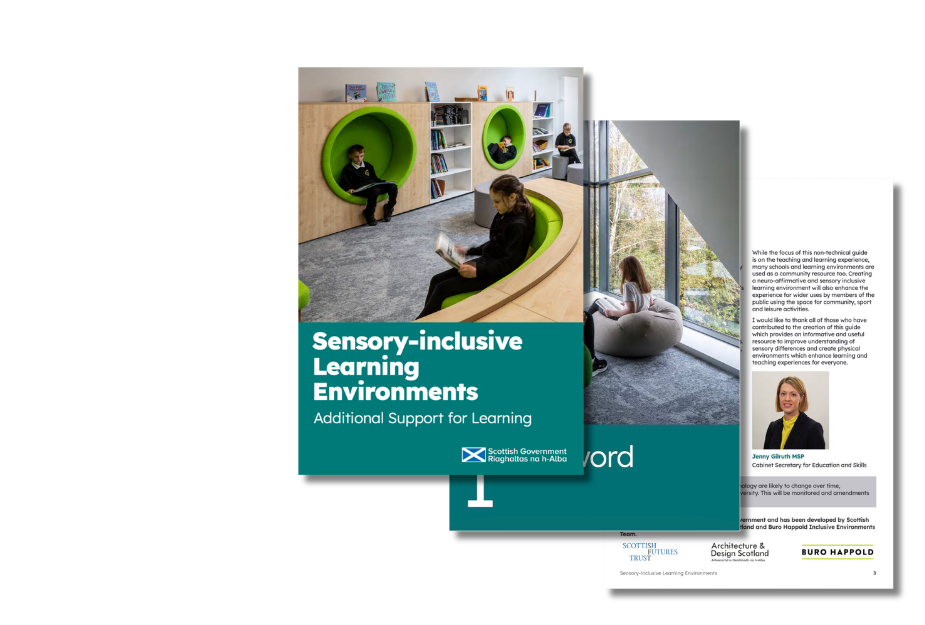
Supporting inclusive design in learning environments
Architecture and Design Scotland, alongside Scottish Futures Trust, Buro Happold, and Aberdeenshire Council, has supported the delivery of the Scottish Government guidance on sensory and inclusive learning environments.
This document was developed in response to the Additional Support for Learning Parliamentary Inquiry, and can be used alongside the PAS6463 ‘Design for the mind. Neurodiversity and the built environment’ guidance document which can be found here.
Why sensory-inclusive environments matter
People experience environments in different ways. For some, sensory stimuli such as noise, lighting or spatial layout can feel overwhelming. This guidance aims to increase awareness of how some people can experience environments with intensity and suggests sensory adaptations and accommodations to physical environments and activities to allow everyone to thrive.
What the guidance covers
This is a non-technical resource designed for any learning environment, and aims to raise awareness of the sensory variation among individuals and the impact physical environments can have on nursery and school age children.
It provides practical advice on key spatial environmental considerations, including:
- Acoustic and sound management
- Lighting
- Quiet and sensory spaces
- Layout and spatial planning
Who should use this guidance
If you are involved in shaping, designing, or managing learning environments, this guidance can support you to create more inclusive and accessible spaces and learn more about this topic. Intended readers include;
- Educators and support staff
- Designers of new and existing buildings and external learning spaces
- Estates/Facilities Management who maintain and operate learning environments
- Local Authorities responsible for early years settings and schools
- Children and young people (or their representatives) wherever learning takes place
- Parents/carers of children and young people
Sensory-inclusive Learning Environments
View or download the guidance document here
Further resources on inclusive and accessible learning environments
This document complements work we have done looking at 'Designing for inclusive and accessible learning environments', which you can read more about on our website.