
Connecting people, places and learning
Working collaboratively to design learning estates for Scotland's new generation of learners.
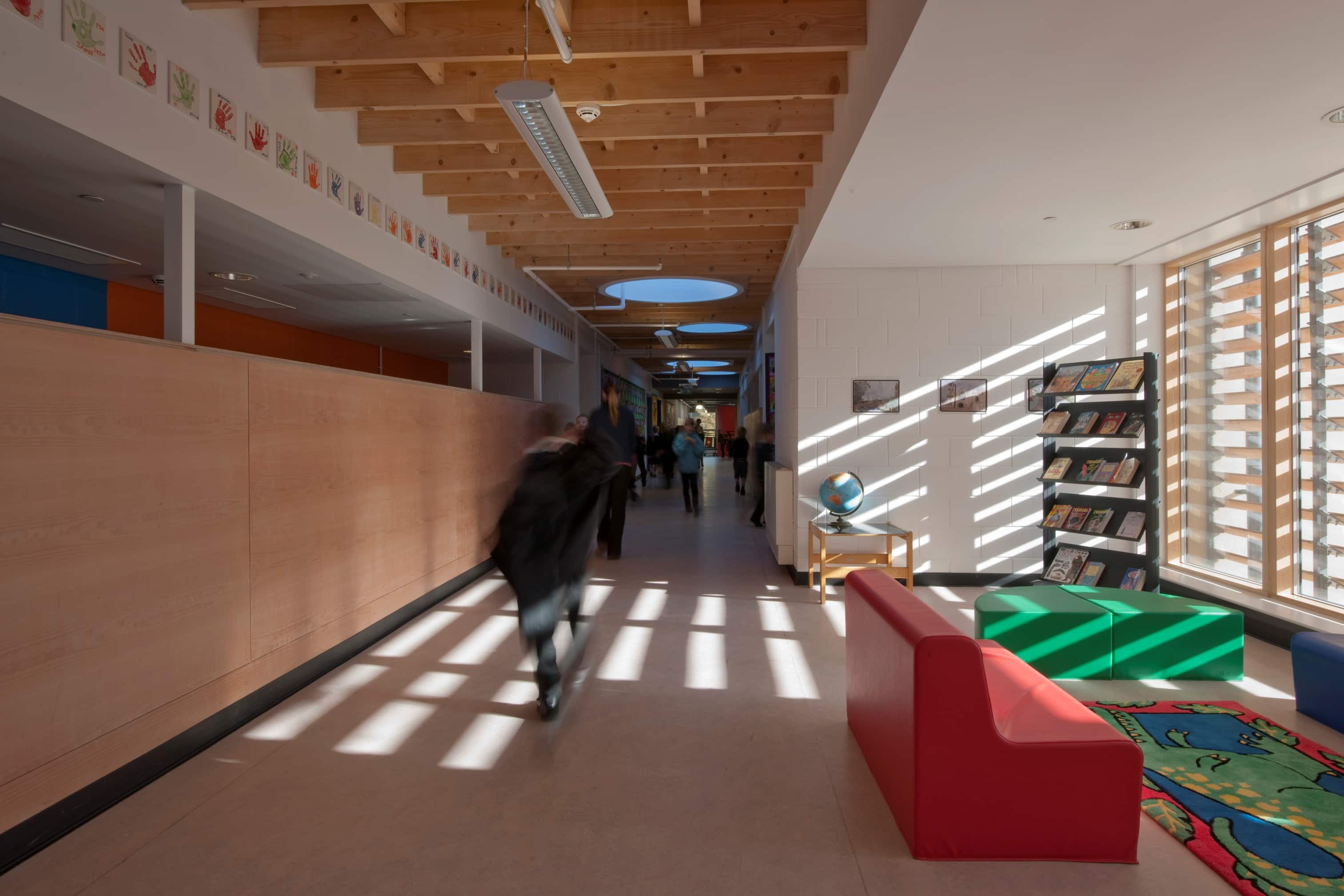
At Architecture and Design Scotland we believe that design has the power to bring people together and make better places for everyone. This belief extends towards educational places and seeing first-hand how people in well-designed environments receive a positive experience throughout their academic and vocational journey.
We are currently supporting the Scottish Government and collaborating with Scottish Futures Trust to help anyone involved in design proposals for learning estates across Scotland by sharing our learning, co-ordinating advice and supporting local authorities.
Only by working together can we create learning environments that will help improve the lives of Scotland’s learners.
Our work on learning estates
As part of our goal of seeing the benefits of the Place Principle become an everyday reality to the way Scotland’s places are created, adapted and sustained, we’ve pulled together specific resources that focuses on improving learning estates.
You can read about some of the projects we’ve been a part of to date. Work that has enabled us to inspire and support those involved in designing and shaping our learning estates.
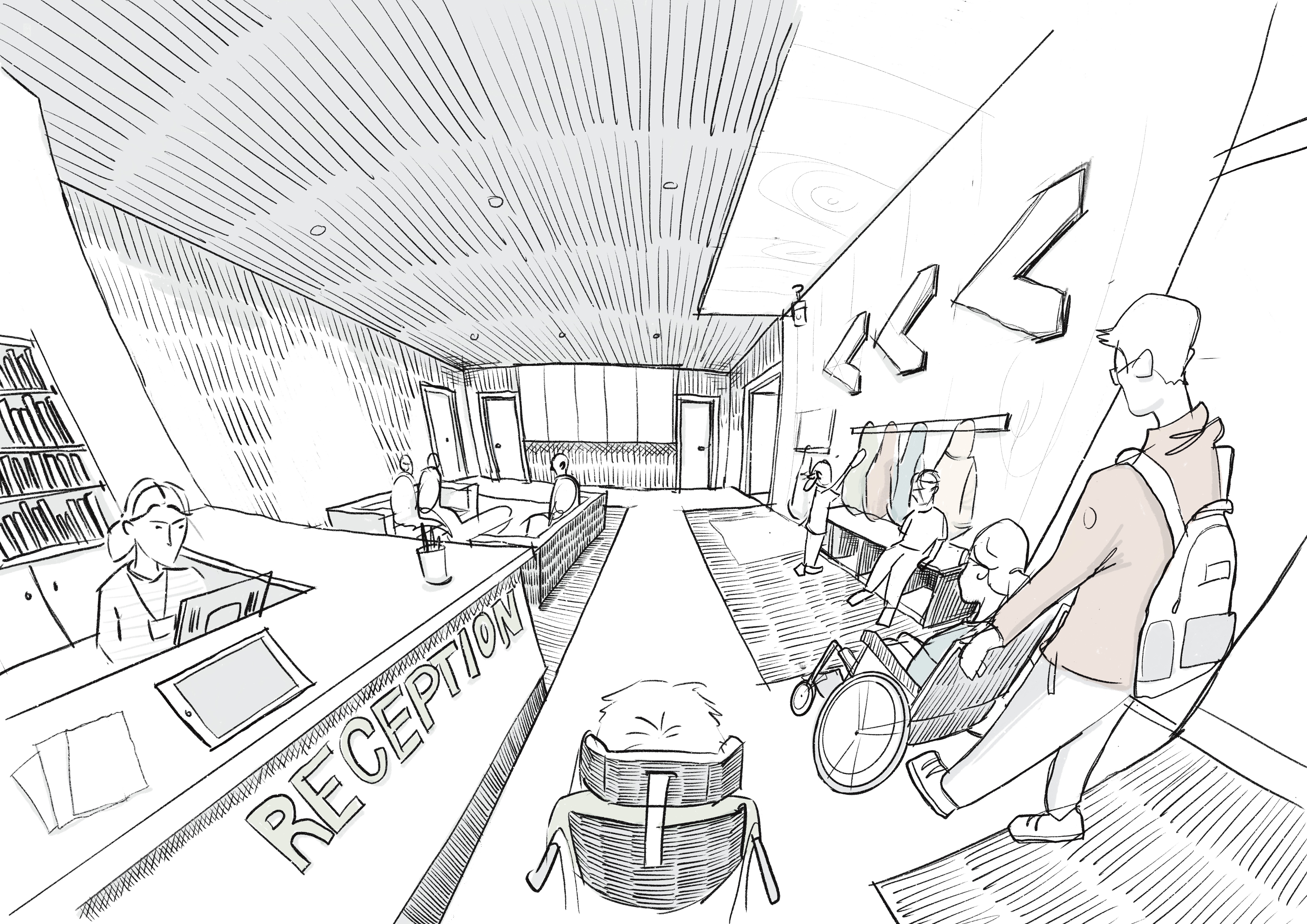
Designing for inclusive and accessible learning environments
Inspired by our work at Craighalbert Centre, the Scottish Centre for Children with Motor Impairments, we have developed a suite of digital resources which explore how design can help to create safe, accessible, and nurturing spaces for every pupil, regardless of their needs. Explore animated videos, user experience scenarios, spatial ideas, and key principles to understand how design can positively impact learning for children with or without Additional Support Needs (ASN).

Design elements for school grounds: ideas to inspire
Discover our resource designed to empower schools, local authorities, and the wider community to transform their school grounds. Full of inspiring ideas for diverse outdoor spaces suited to all school settings, this resource also offers essential guidance on planning, designing, and delivering your project from start to finish.
Climate Ready School Grounds
Developed in partnership with Learning through Landscapes, we have launched a resource to help designers, local authorities and teachers play their role in adapting school grounds to tackle the climate emergency.
We worked with Learning through Landscapes to facilitate workshops with three schools to better understand the areas that we need to focus on in order to adapt our school grounds for a changing climate.
We support conversations around needs and ambitions by including learners, teachers and communities in participation methods for co-designing learning environments.
This process allows all of us to see a bigger picture of what to connect, how to connect it and what form the built environment should include to accommodate these connections.
And we do this through the Inspiring Learning Spaces Toolkit.
Scotland offers schools and their pupils one of the richest and most varied outdoor classrooms in the world. Our own back yard – whether that is rural, urban, or suburban – is one of the greatest resources available in taking forward the aims, principles and values of the Curriculum for Excellence.
This learning resource looks at opportunities and ways to plan for learning and includes several case studies across Scotland. It provides you with examples of schools that have embraced outdoor learning opportunities beyond the school wall.
From taking the school as the hub for learning to shifting onto school grounds and beyond, we can map these into educational environments to create more opportunities for learning.
The potential impact of participation in school design can be remarkable. It offers excellent educational opportunities and provides a means to unlock ideas and potential of our students in thinking about the environments in which they live and learn.
This short guide takes you through what participation is, why we do it, when we do it and who does it. One of the many benefits, from the point of view of a project manager or a schoolteacher, is that it can act as a tool for change.
It gathers evidence of how school users want to learn and provides a strong mandate for what change can look like.
Not only can it provide a number of educational benefits in its own right, but it also offers the opportunity to truly build services around the needs of communities, for communities.
Related case studies
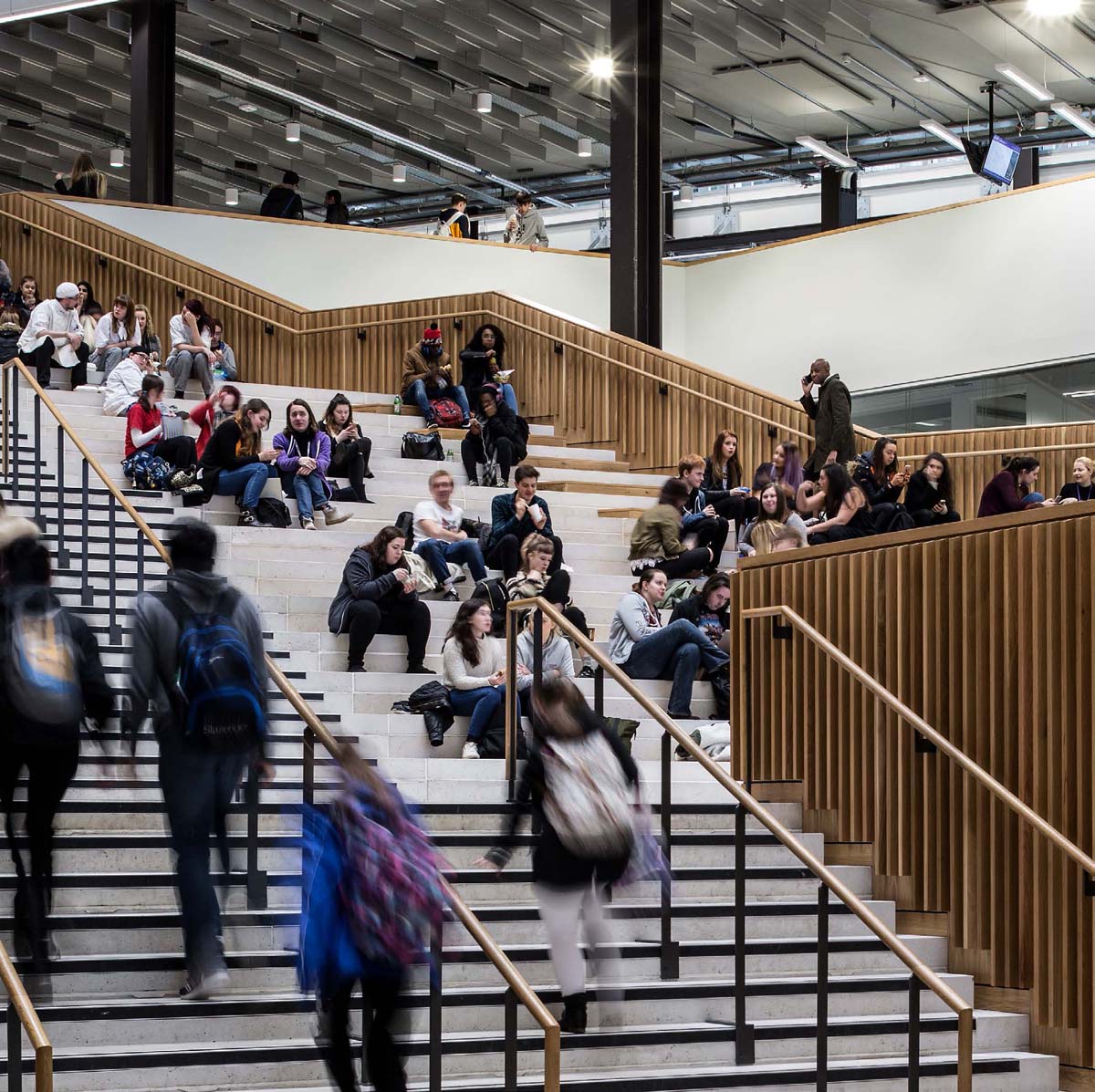
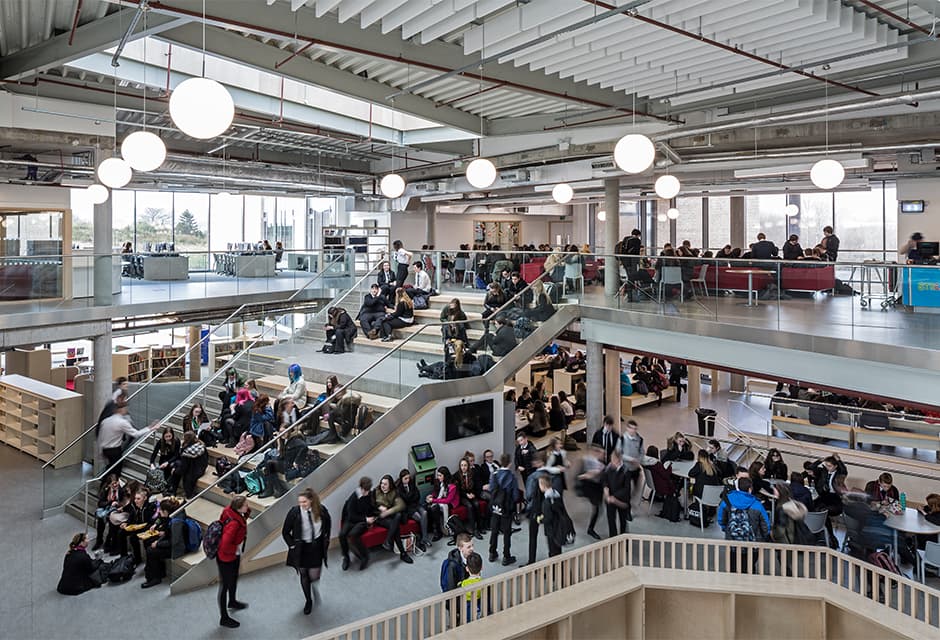
We have a collection of case studies that showcase well-designed educational spaces for schools across Scotland. Learn about what you can include for your learning estate from real-life examples.
Support for the learning estate - how we can help
Tackling the climate emergency is central to Scotland’s Learning Estate Strategy. The Learning Estate Investment Programme (LEIP) aims to deliver digitally enabled, low-carbon (new and refurbished) schools and campuses that are inclusive and welcoming places which meet the needs of the whole community.
How we can help
We know that there are many challenges for those who plan, design, and deliver our places, including:
- tackling the climate emergency
- achieving Net Zero emissions
- addressing inequalities in health and wellbeing
- supporting inclusive economic stability
We are here to help local authorities, schools and communities to work together to achieve those goals. We are offering early-stage place planning and design support to education authorities, national partners and schools in Scotland at no cost.
We are here to help projects at an early-stage project to collaboratively identify and articulate design outcomes, contributing to the achievement of the priorities of the Learning Estate Strategy and the Learning Estate Investment Programme (LEIP)
- design advice and support to education authorities to help briefing and option stages of school investment and design
- use of the Designing for a Changing Climate: the eight principles of a carbon conscious place to frame discussions to identify inclusive Net Zero Economy Outcomes that supplement existing technical and environmental objectives to inform a project brief and evaluation framework
- outdoor learning design advice informed by our current action research projects with Learning through Landscapes (Climate Ready School Grounds) and Queen Margaret University (Outdoor Learning Hub)
- placemaking support for projects that are aiming to achieve design focused objectives of Net Zero Public Sector Building Standard (NZPSBS)
Tests of Change
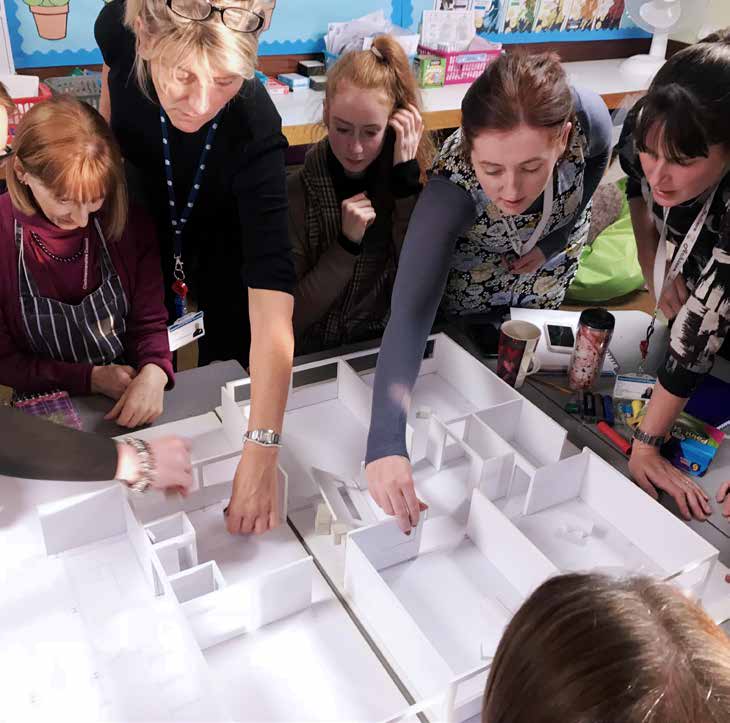
Tests of change is a process that trials out new ways of working for creating learning spaces. It’s a process that requires us to engage with learners and teachers to highlight issues and opportunities that arise within a learning environment.
During this process we aim to:
- Develop a culture of testing to inform investment and approaches to designing spaces
- Enhance teaching and learning environments
We use the following methods for our Tests of Change process
Consulting with school leaders and teachers to establish the scope of practice change and identify issues and opportunities.
Involving learners and teachers in workshop participation (space hacks) to trial temporary spatial solutions.
Highlighting observations and findings from the space hack to help inform investment opportunities.
Applying the Learning Estate Strategy to our work
Delivered by the government, the Learning Estate Strategy (LES) aims to improve outcomes for communities by connecting people, place and learning through its guiding principles.
We apply the LES to our work to help improve education investment, manage the transition of the learning experience and empower individuals within the learning community.
Header image credit: Paul Zanre